How Smart Home Technology Is Changing Modern Living
Introduction
Smart home technology is changing the way people interact with their homes. In the past, a home was mainly a physical space where people lived, worked, relaxed, and stored their belongings. Today, technology can connect many parts of a home through the internet, sensors, mobile applications, artificial intelligence, automation systems, and voice controls. Lights can turn on automatically, thermostats can adjust temperatures, security cameras can send alerts to smartphones, and appliances can be controlled remotely.
The idea of a smart home is no longer limited to futuristic concepts. Many smart devices are now available for everyday consumers, including smart bulbs, smart plugs, smart speakers, video doorbells, security cameras, robot vacuum cleaners, smart TVs, connected thermostats, smart locks, and intelligent appliances. These devices can work independently or together as part of a larger home automation system.
Smart home technology is changing modern living because it focuses on convenience, automation, efficiency, security, and personalization. Instead of manually controlling every device, homeowners can create routines that allow technology to perform repetitive tasks automatically. A morning routine might gradually turn on lights, adjust the thermostat, and start a coffee machine. At night, a single command could turn off lights, lock doors, and activate security systems.
However, smart homes also introduce new considerations. Internet connectivity, privacy, cybersecurity, device compatibility, installation costs, maintenance, and dependence on software all become important. As more household devices become connected, understanding both the benefits and challenges of smart home technology is increasingly important.
What Is Smart Home Technology?
Smart home technology refers to devices and systems that allow household equipment to connect, communicate, and sometimes operate automatically. These devices may use Wi-Fi, Bluetooth, Zigbee, Z-Wave, Thread, or other communication technologies to exchange information.
A smart home can be very simple. A single smart bulb controlled from a smartphone technically qualifies as a connected home device. More advanced homes may contain dozens of devices working together through a central platform.
Smart home technology generally combines hardware, software, sensors, connectivity, and automation. Sensors collect information about the environment, software processes that information, and connected devices respond according to programmed instructions.
For example, a motion sensor can detect movement in a hallway. The smart home system can then instruct a light to turn on. After a certain period without movement, the light can automatically turn off. This simple example demonstrates how automation can reduce the need for manual control.
How Smart Homes Work
Smart homes typically rely on a combination of connected devices and a control platform. The devices communicate through a home network or another wireless technology, while software allows users to control them.
A smartphone application can act as a control center for many devices. Users may be able to turn lights on and off, view security cameras, adjust thermostats, lock doors, or monitor appliances from the application.
Voice assistants can provide another method of control. Compatible devices can respond to spoken commands, allowing users to control certain functions without touching a phone or physical switch.
Automation rules add another level of intelligence. Instead of requiring users to issue commands, the system can respond to specific conditions. Time, motion, location, temperature, light levels, and other information can be used to trigger actions.
Smart Lighting
Smart lighting is one of the most common examples of home automation. Smart bulbs, switches, and light strips can be connected to a smartphone or smart home platform.
Users can turn lights on and off remotely, adjust brightness, and create schedules. Some products also allow users to change color temperature or use different colors for decorative purposes.
Automation can make lighting more convenient. Lights can turn on at sunset, gradually brighten in the morning, or switch off automatically when everyone leaves the house.
Smart lighting can also support different activities. Brighter lighting can be used for working, while softer lighting may be more appropriate for relaxing in the evening.
Smart Thermostats and Climate Control
Heating and cooling systems consume significant amounts of energy in many homes. Smart thermostats aim to make temperature management more convenient and automated.
A smart thermostat can allow homeowners to adjust settings through a smartphone. Scheduling features can automatically change temperatures at different times of the day.
Some advanced systems can use sensors and learning algorithms to understand household patterns. For example, a system may recognize when a home is usually occupied and adjust temperature settings accordingly.
Smart climate control can also provide remote access. If someone forgets to adjust the thermostat before leaving home, they may be able to change the setting from their phone.
The actual energy savings depend on the building, climate, equipment, insulation, settings, and user behavior. Smart technology provides additional control, but it does not automatically guarantee lower energy consumption.
Smart Security Cameras
Security cameras have become an important part of many smart homes. Connected cameras can allow homeowners to monitor indoor and outdoor areas through smartphones and other devices.
Modern cameras may include motion detection, night vision, two-way audio, notifications, and intelligent detection features. When activity is detected, the system can send an alert to the homeowner.
Remote viewing is another major benefit. A homeowner can check a property while away from home, depending on the camera’s connectivity and service configuration.
However, security cameras also raise privacy concerns. Cameras should be positioned carefully, accounts should be protected with strong passwords, and users should understand where video recordings are stored and who can access them.
Smart Doorbells
Smart doorbells combine traditional doorbell functionality with cameras and internet connectivity. When someone approaches the door, the homeowner can receive an alert on a smartphone.
Many smart doorbells allow two-way communication. A homeowner can communicate with a visitor even when they are away from the property.
Smart doorbells can also record activity around an entrance. This can provide useful information when deliveries arrive or when unexpected activity occurs.
Like security cameras, smart doorbells need appropriate privacy and security settings. Users should also consider local laws and the privacy of neighbors and visitors.
Smart Locks
Smart locks replace or supplement traditional locks with electronic access systems. Depending on the model, they may support smartphone applications, PIN codes, biometric access, temporary digital keys, or other methods.
One advantage of smart locks is flexible access management. Homeowners may be able to provide temporary access to family members, guests, cleaners, or service providers without physically giving them a traditional key.
Some systems can also automatically lock doors after a certain period or when users leave the home.
Security should remain the primary consideration. Smart locks should be installed correctly and protected with strong account security. Homeowners should also consider backup access methods in case batteries fail or connectivity becomes unavailable.
Smart Speakers and Voice Assistants
Smart speakers provide an easy way to interact with connected devices. Users can ask questions, play music, set reminders, control compatible lights, and perform other tasks using voice commands.
In a smart home, a voice assistant can become a central interface. Instead of opening a smartphone application, users may simply speak a command.
Voice control can be particularly useful when someone’s hands are occupied. For example, someone cooking in the kitchen can use voice commands to set a timer or adjust compatible lights.
At the same time, voice-enabled devices raise privacy considerations because microphones are designed to respond to spoken commands. Users should review privacy settings and understand how voice recordings are handled by the service they use.
Smart Appliances
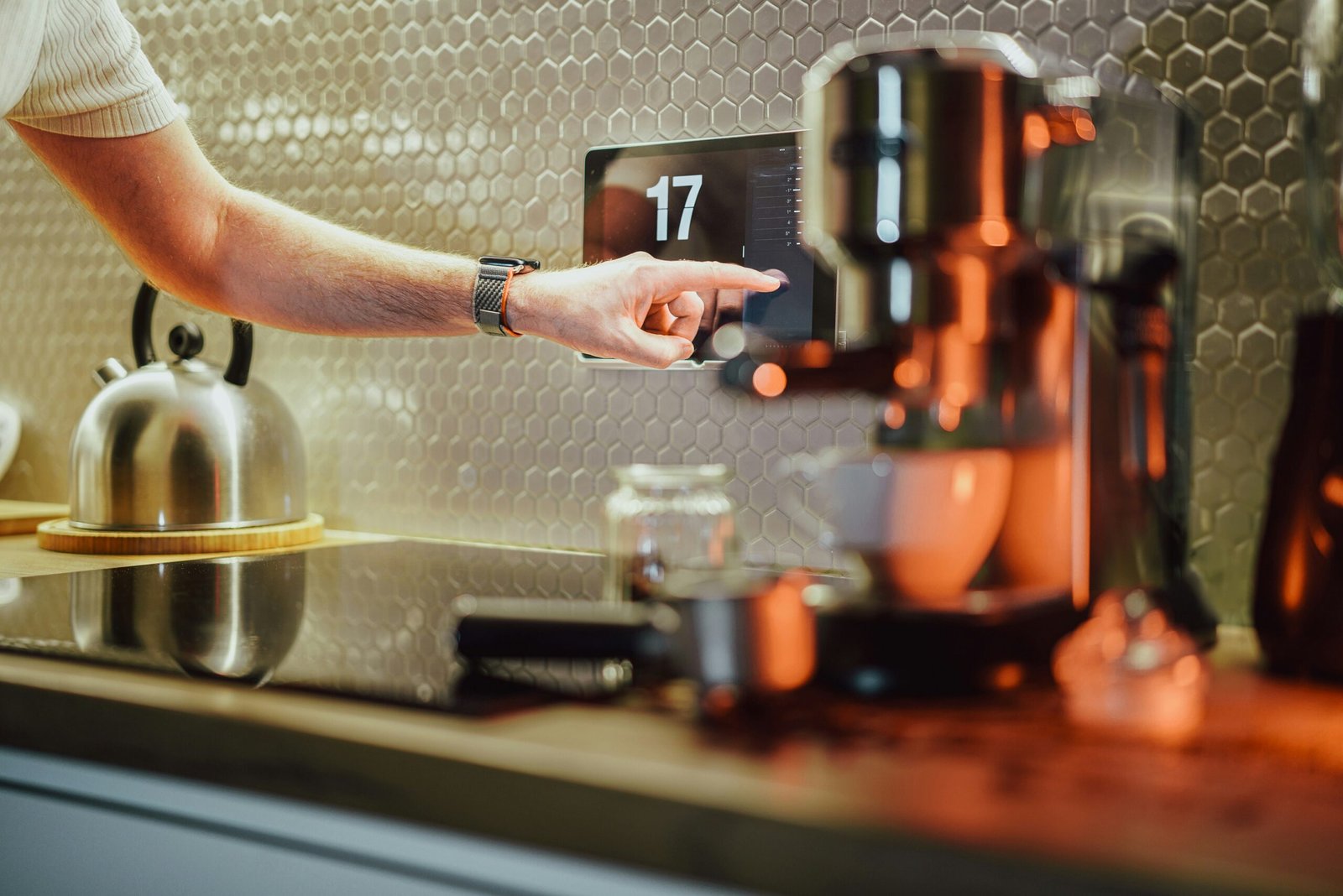
Kitchen and household appliances are increasingly gaining connected features. Smart refrigerators, ovens, washing machines, dishwashers, coffee machines, and other appliances can provide remote controls and notifications.
A smart washing machine might notify the user when a cycle finishes. A connected oven might allow temperature settings to be adjusted remotely. A smart refrigerator could provide information about its status or maintenance requirements.
The usefulness of smart appliances varies by household. Not every appliance needs internet connectivity, and consumers should consider whether the connected features provide practical benefits before paying extra for them.
Smart Robot Vacuum Cleaners
Robot vacuum cleaners are a clear example of household automation. These devices use sensors, navigation systems, software, and motors to clean floors with limited human involvement.
Basic models may follow relatively simple movement patterns, while advanced models can map rooms, recognize obstacles, create cleaning zones, and return automatically to charging stations.
Some models combine vacuuming with mopping. Others can automatically empty their dust containers.
Robot vacuums can save time by performing routine cleaning tasks automatically. However, they still require maintenance, including emptying containers, cleaning brushes, replacing filters, and removing objects that could interfere with operation.
Smart Plugs
Smart plugs provide an inexpensive way to add connectivity to certain traditional appliances. They plug into an electrical outlet and allow users to control compatible devices electronically.
A smart plug can be useful for lamps, fans, chargers, and other suitable equipment. Users can often control them through smartphone applications or voice assistants.
Scheduling is another useful feature. A lamp could automatically turn on in the evening and switch off at bedtime.
Users should always check electrical ratings before connecting appliances to smart plugs. High-power equipment may require specialized solutions.
Home Energy Management
Smart home technology can provide homeowners with more information about energy consumption. Connected meters, smart plugs, thermostats, and energy monitoring systems can help users understand when and where electricity is being used.
Visibility is important because people cannot easily change consumption patterns they cannot see. An energy monitoring system may show that certain appliances consume more electricity than expected or that usage increases during specific periods.
Smart technology can also support automation. Certain devices can be scheduled to operate at preferred times or respond to conditions.
The purpose is not simply to add more technology but to help households make informed decisions about energy use.
Smart Solar and Battery Systems
As residential solar energy becomes more common in some markets, smart technology is increasingly being used to manage energy generation and storage.
Connected solar systems can provide information about electricity production, household consumption, and battery storage. Homeowners can monitor performance through applications.
Smart battery systems can also manage when electricity is stored or used, depending on system design and available settings.
These technologies can make household energy management more sophisticated by connecting generation, storage, and consumption information in one system.
Smart Water Management
Smart technology is also entering household water systems. Connected leak sensors can detect unexpected water activity and notify homeowners.
Leak detection can be valuable because small leaks can cause significant damage if they remain unnoticed for long periods. Some systems can automatically shut off water when unusual activity is detected.
Smart irrigation systems can also adjust watering schedules based on weather information, soil conditions, or programmed schedules.
These technologies can help homeowners monitor water use while reducing unnecessary waste.
Smart Air Quality Monitoring
Indoor air quality can affect comfort and the overall living environment. Smart air-quality monitors can measure selected environmental indicators and provide information through displays or smartphone applications.
Depending on the device, sensors may monitor particulate matter, temperature, humidity, carbon dioxide, or other indicators.
The value of air-quality monitoring comes from increased awareness. If indoor conditions change significantly, homeowners can investigate possible causes and take appropriate action.
Smart air purifiers can complement monitoring systems by automatically adjusting operation based on detected conditions.
Smart Curtains and Blinds
Motorized smart blinds and curtains can be integrated into home automation systems. Users can control them through applications, schedules, voice commands, or automated routines.
Curtains can open in the morning and close in the evening. They can also respond to sunlight or programmed schedules.
Automated window coverings can improve convenience and may contribute to temperature management by controlling sunlight entering a room.
Smart Entertainment Systems
Entertainment is another major area affected by smart home technology. Smart TVs, streaming devices, speakers, soundbars, gaming systems, and lighting can work together to create connected entertainment environments.
A movie routine could reduce room lighting, adjust compatible curtains, activate a television, and configure a sound system.
Music can also be distributed across multiple rooms through compatible wireless speaker systems.
The result is a more integrated entertainment experience where multiple devices can be controlled through one system.
Smart Home Automation Routines
Automation routines are among the most powerful features of smart homes. A routine allows several actions to occur together based on one command or condition.
A morning routine might turn on bedroom lights, provide weather information, adjust the thermostat, and activate selected appliances.
A leaving-home routine could turn off lights, adjust climate controls, lock compatible doors, and activate security devices.
A bedtime routine could perform similar tasks in reverse, creating a consistent process every night.
Automation is useful because it reduces repetitive manual actions. Instead of controlling multiple devices separately, users can create a single routine.
Geolocation-Based Automation
Some smart home systems can use smartphone location information to trigger automation. For example, a system might recognize when household members leave the property and change certain settings.
When someone returns, selected lights or climate systems can respond automatically.
Geolocation automation can reduce unnecessary device operation while providing convenience. However, users should understand the privacy implications of sharing location information with applications and services.
Artificial Intelligence in Smart Homes
Artificial intelligence is becoming an increasingly important part of smart home technology. AI can help devices interpret information from sensors, recognize patterns, understand voice commands, and automate decisions.
For example, a security camera may use intelligent software to distinguish between different types of movement. A smart thermostat may analyze usage patterns to improve scheduling.
AI assistants can also understand natural language more effectively than traditional command-based systems. This could make smart homes easier to operate because users can communicate with devices more naturally.
The future may involve AI systems coordinating multiple devices rather than users manually managing each product.
Smart Homes and Elderly People
Smart home technology can provide useful assistance to older adults. Automated lighting can reduce the need to move around in dark areas, while smart doorbells and cameras can provide additional awareness of activity around the home.
Voice assistants can help users set reminders, make calls, control lights, or perform other tasks without navigating complex interfaces.
Sensors can also monitor certain environmental conditions. However, smart home technology should supplement appropriate human support and should not be treated as a replacement for professional care when such care is needed.
Smart Homes and People With Disabilities
Connected technology can improve accessibility for some people with disabilities. Voice control, automated doors, smart lighting, motorized curtains, and remote device management can reduce the physical effort required to perform everyday tasks.
For someone who has difficulty reaching traditional switches, a voice-controlled system may provide an alternative method of control.
Accessibility benefits depend heavily on individual needs. The most useful smart home features are those that address specific physical, sensory, or communication challenges.
Smart Homes and Families
Smart home systems can help families manage shared spaces and routines. Shared calendars, smart speakers, connected appliances, and automated lighting can make household organization easier.
Parents can use smart devices to manage certain home routines, while family members can share access to selected systems.
At the same time, families should establish clear rules around privacy, device usage, and access permissions. Not every household member needs access to every connected device.
Smart Homes for Remote Workers
The growth of remote work has increased the importance of home technology. A smart home can help create a comfortable and efficient working environment.
Smart lighting can adjust brightness, smart climate systems can maintain comfortable temperatures, and smart speakers can provide reminders or timers.
Connected security devices can also help remote workers monitor their homes without constantly interrupting their work.
A dedicated workspace combined with carefully selected technology can create a better separation between professional and personal activities.
Smart Homes and Home Security
Traditional security systems relied heavily on alarms and physical locks. Smart technology adds remote monitoring, notifications, cameras, sensors, and automation.
Door sensors can detect when entrances are opened. Motion sensors can identify movement in selected areas. Cameras can provide visual information, while smart locks can offer digital access controls.
The combination of these devices can create a more comprehensive security system.
However, no connected system provides absolute security. Physical security practices, cybersecurity, proper installation, and regular maintenance remain important.
Cybersecurity in Smart Homes
Every internet-connected device can potentially become part of a home’s digital security environment. Poorly secured smart devices can create risks if attackers gain unauthorized access.
Users should change default passwords, use strong unique credentials, enable multi-factor authentication where available, and keep device firmware updated.
Home routers should also be secured because many smart devices depend on the local network. Separating certain smart devices onto a dedicated network can provide an additional layer of organization and security.
Consumers should also consider the reputation and support history of manufacturers before purchasing connected products.
Privacy Concerns
Smart home devices can collect information about household activity. Cameras can capture video, voice assistants can process spoken commands, and sensors can reveal patterns about when people are home.
This makes privacy an important consideration when building a smart home.
Users should understand what data a device collects, where that data is stored, how long it is retained, and whether it is shared with third parties.
Privacy settings should be reviewed regularly, especially after software updates or changes to household members and accounts.
Internet Dependence
Many smart devices depend on internet connectivity. If the internet connection fails, some devices may continue operating locally while others may lose important features.
This means homeowners should understand which functions require cloud services and which functions work without internet access.
Critical systems such as locks, lighting, heating, and security equipment should ideally have appropriate backup options.
A smart home should remain practical even when technology temporarily fails.
Device Compatibility
Compatibility is one of the biggest challenges in building a smart home. Different manufacturers may use different platforms, applications, communication standards, and ecosystems.
A device that works perfectly with one smart home platform may have limited functionality with another.
Consumers should check compatibility before purchasing products. Choosing devices that support widely adopted standards can help improve flexibility and reduce dependence on a single manufacturer.
The Importance of Smart Home Standards
Smart home standards are designed to improve communication between devices from different manufacturers. The development of interoperability standards can make it easier for consumers to combine products.
Better interoperability can reduce the need to use separate applications for every device.
As smart home standards continue to develop, consumers may gain more flexibility when selecting products from different manufacturers.
Cost of Smart Home Technology
The cost of creating a smart home can vary significantly. A basic system might consist of a few affordable bulbs and plugs, while an advanced system with security cameras, smart appliances, automated blinds, thermostats, and professional installation can cost considerably more.
Homeowners do not need to automate everything at once. Starting with a few useful devices can be a practical approach.
The best purchases are usually those that solve a genuine problem or provide meaningful convenience.
Installation and Maintenance
Some smart devices are simple to install. Smart bulbs and plugs may require only basic setup through a smartphone application.
Other systems, such as smart thermostats, locks, cameras, electrical equipment, or automated blinds, may require professional installation depending on the product and property.
Maintenance is also important. Batteries need replacement or charging, sensors need cleaning, software requires updates, and hardware can eventually fail.
A smart home is not completely maintenance-free. Automation reduces some manual work but creates new responsibilities.
Smart Homes and Daily Convenience
The biggest impact of smart home technology may be its ability to remove small repetitive tasks from daily life.
Turning lights off, adjusting temperatures, checking doors, monitoring appliances, and controlling entertainment systems may seem like simple activities. However, automating them can save time and reduce mental effort.
The cumulative effect can be significant. Instead of repeatedly managing individual devices, users can create systems that respond automatically to routines and conditions.
Smart Homes and Energy Efficiency
Smart technology can help households become more aware of energy consumption. Automated lighting, climate control, smart plugs, and energy monitoring can provide information and control.
Lights can turn off when rooms are empty. Heating and cooling schedules can be adjusted according to occupancy. Certain appliances can be controlled according to planned usage.
However, smart technology itself consumes energy. Devices that remain continuously connected use electricity, so overall efficiency depends on the entire system rather than one feature.
Smart Homes and Sustainability
Smart home technology can contribute to sustainability when it helps reduce unnecessary energy or water use. Automated systems can prevent lights from remaining on unnecessarily and can optimize certain household processes.
Smart irrigation can reduce unnecessary watering, while leak detection can help prevent water loss.
The environmental impact of smart devices also depends on manufacturing, transportation, electronic waste, and product lifespan. Choosing durable devices and using them for longer can be an important part of responsible technology use.
Challenges of Smart Home Technology
Despite its advantages, smart home technology has several challenges. Complexity can increase as the number of devices grows.
A home with dozens of devices may require multiple applications, accounts, batteries, firmware updates, and network configurations.
There is also the possibility of technical failures. A device may stop working because of a software update, network issue, battery problem, hardware failure, or discontinued cloud service.
Consumers should therefore consider long-term support before investing heavily in a connected ecosystem.
The Future of Smart Homes
The future of smart home technology is likely to involve greater automation and improved interoperability. Devices may increasingly communicate with each other without requiring users to manually configure every interaction.
Artificial intelligence could become a central component of future home systems. Instead of responding only to predefined commands, smart homes may increasingly understand context and routines.
For example, an intelligent home system could potentially recognize that residents have arrived, understand their usual evening routine, and coordinate lighting, climate control, entertainment, and security systems accordingly.
Future systems may also become more energy-aware, using information about electricity consumption, solar generation, battery storage, weather conditions, and household activity to coordinate energy use.
How to Start Building a Smart Home
People interested in smart home technology do not need to transform their entire home immediately. Starting with one or two devices can provide an opportunity to learn how connected technology works.
Smart lighting, smart plugs, smart speakers, or a basic security device can provide relatively simple introductions to automation.
After becoming comfortable with the technology, homeowners can gradually expand the system. Compatibility should remain a priority so that new devices can work with existing equipment.
Planning before buying can prevent unnecessary spending and reduce compatibility problems.
Final Thoughts
Smart home technology is changing modern living by bringing automation, connectivity, remote control, and intelligent decision-making into everyday household activities. From lighting and climate control to security, entertainment, cleaning, energy management, and accessibility, connected devices can influence many parts of daily life.
The greatest benefit of a smart home is not simply having more technology. It is the ability to make technology work quietly in the background. Lights can respond to schedules, security systems can provide alerts, appliances can communicate their status, and routines can combine multiple actions into a single automated process.
At the same time, smart homes require thoughtful decisions about privacy, cybersecurity, compatibility, cost, maintenance, and internet dependence. More connected devices do not automatically create a better home. The value comes from selecting technologies that genuinely improve the way people live.
As artificial intelligence, wireless standards, sensors, and connected devices continue to develop, smart homes are likely to become more capable and easier to use. The modern home is gradually becoming more than a physical space. It is becoming a connected environment where technology can respond to the needs, habits, and routines of the people who live there.